Case Study · Active Safety Solutions
AI-Triggered Crossing Warnings at an Automotive Manufacturing Facility
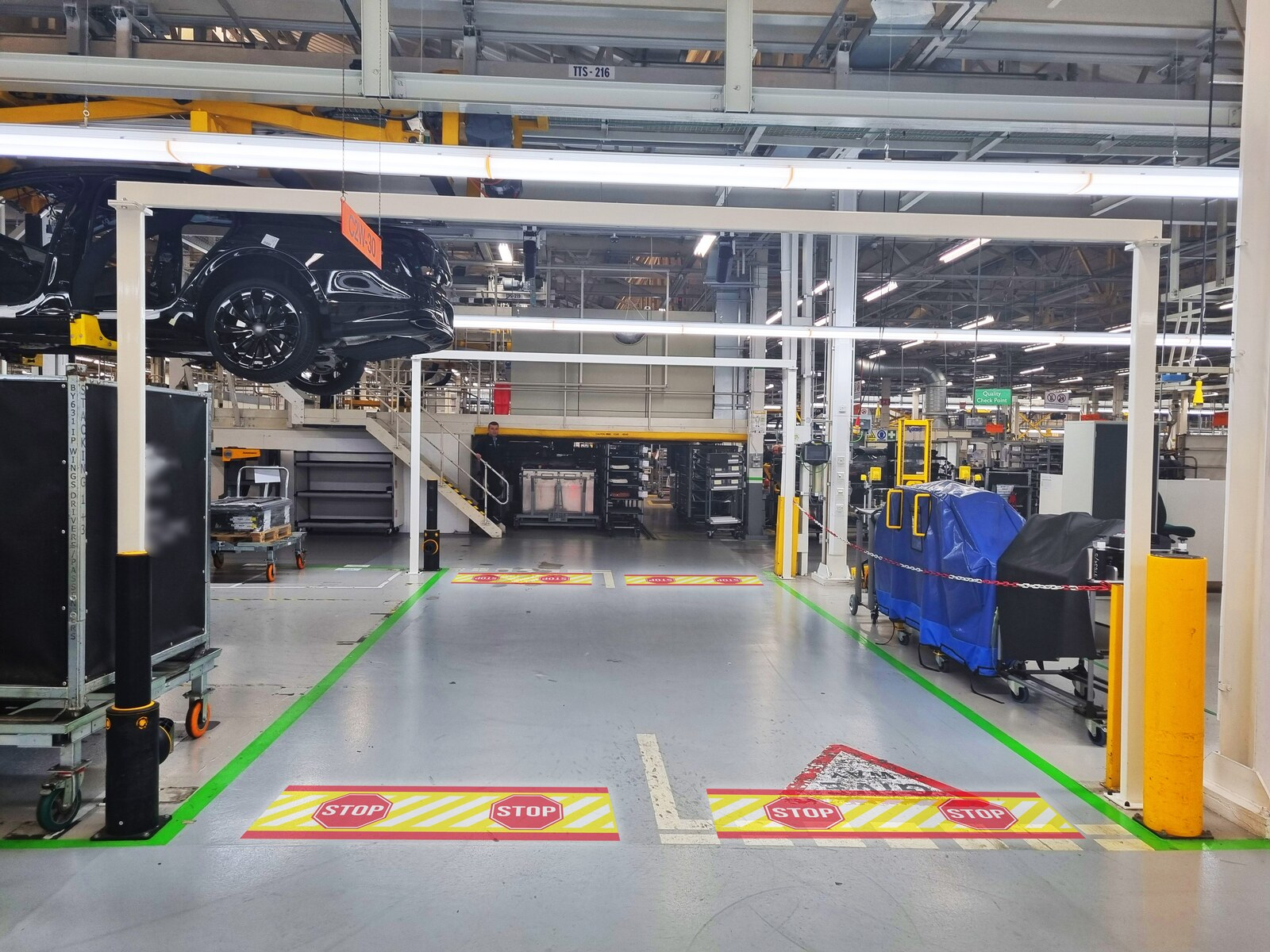
WSS combined AI visual recognition with projected STOP signs and audible warnings to address a crossing beneath an overhead vehicle carrier.
The Challenge
Pedestrians, material transfer carts and ride-on pallet trucks used the height-limited underpass. When a vehicle travelled overhead, movement through the crossing needed to be held back.
The initial system used sequential beam detection, projected warnings and audible alarms. Maintenance activity could trigger unnecessary alerts, while differences in vehicle height made consistent detection difficult.
Our Approach
- Identify vehicle wheels entering a defined zone above the crossing
- Filter out unrelated activity that could interrupt beam sensors
- Activate the existing projected and audible warnings
- Fit around the production line without modifying the carrier infrastructure
What We Delivered
The system activates projected STOP warnings and the existing sounders to instruct pedestrians and ground-level traffic to wait while the overhead hazard passes.
See the system in action
How the AI system works
Tom Davies explains the detection approach and its integration with the crossing warnings.
Results & What’s Next
The AI upgrade changed what triggered the warnings: recognition of the defined carrier-wheel hazard replaced reliance on interrupted beams alone.
The published project review reports fewer nuisance activations, improved operator confidence and smoother crossing flow. The system was integrated with the existing warning equipment without major changes to the production line.
The project demonstrates:
- Site-specific recognition focused on the feature associated with the hazard
- Connected warnings that turn detection into an immediate instruction
- Practical integration with the existing crossing controls
- A considered upgrade addressing the limitations of the initial detection method
Recognise the hazard. Activate the warning. Keep the crossing clear.
Ready to start investing in your safety? Our team of experts is available to help you plan, structure and build your project.