WSS Knowledge & Insights
Sign Blindness: Why Workers Overlook Safety Signs
How familiarity, visual clutter and poor placement can weaken workplace warnings — and what to do about it.
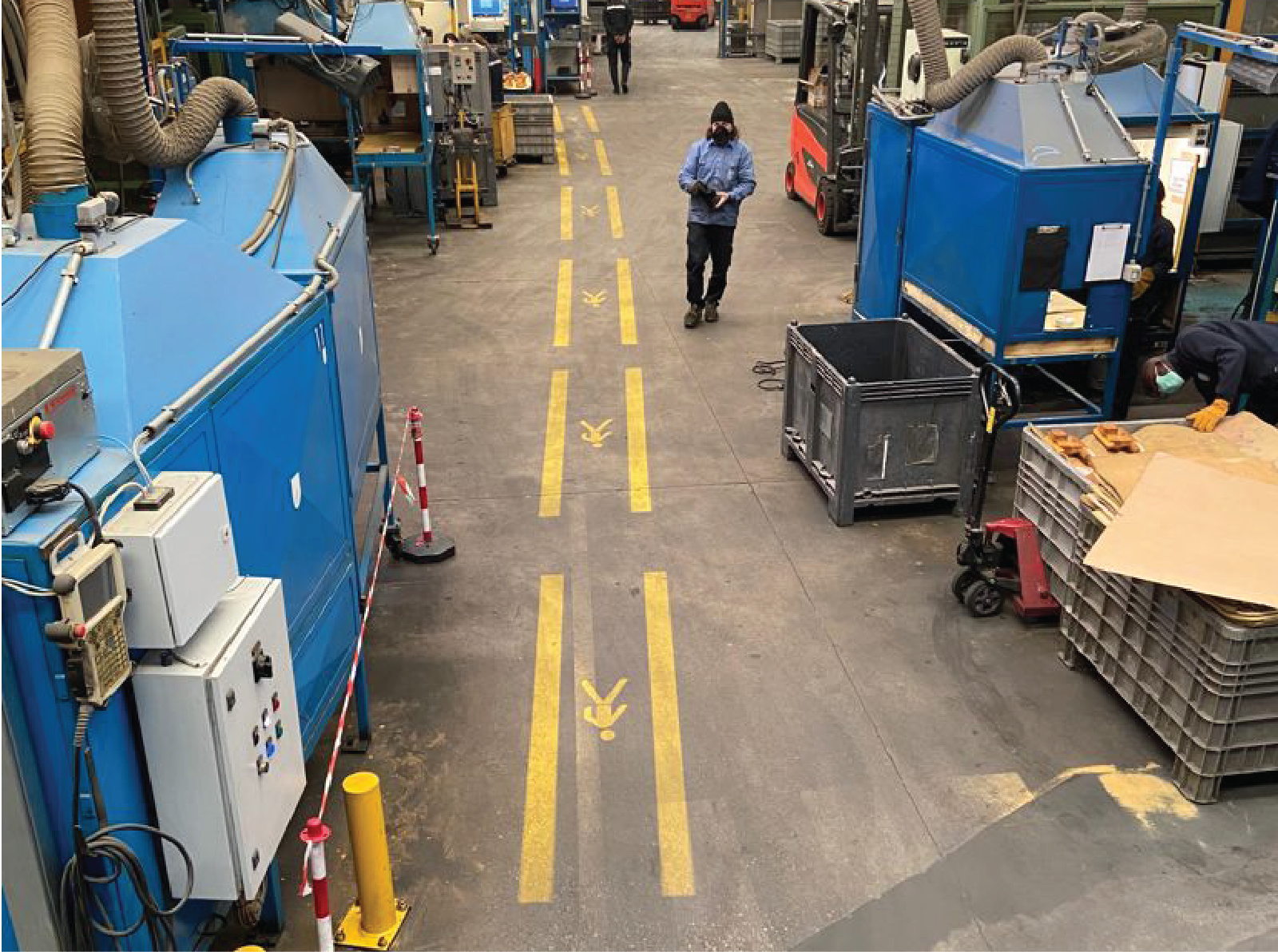
A safety sign can be clearly displayed, correctly worded and still fail to attract attention when someone needs it. In busy warehouses and factories, workers may pass the same warnings every day while concentrating on moving goods, operating equipment or reaching their next task.
This is often described as sign blindness: an informal term for the way important warnings can become less noticeable through familiarity, distraction or competing visual information. It is not a formal diagnosis, and it should not be treated as the same thing as inattentional blindness. But the practical concern is real: putting up a sign does not guarantee that somebody will notice, understand or act on it.
Why Do Workers Stop Noticing Safety Signs?
There is rarely a single explanation. Repeated exposure can make a familiar sign less attention-grabbing, particularly when the message appears in the same place day after day. At the same time, a worker who is focused on a demanding task may fail to notice something visible in their surroundings. Researchers describe the latter phenomenon as inattentional blindness.
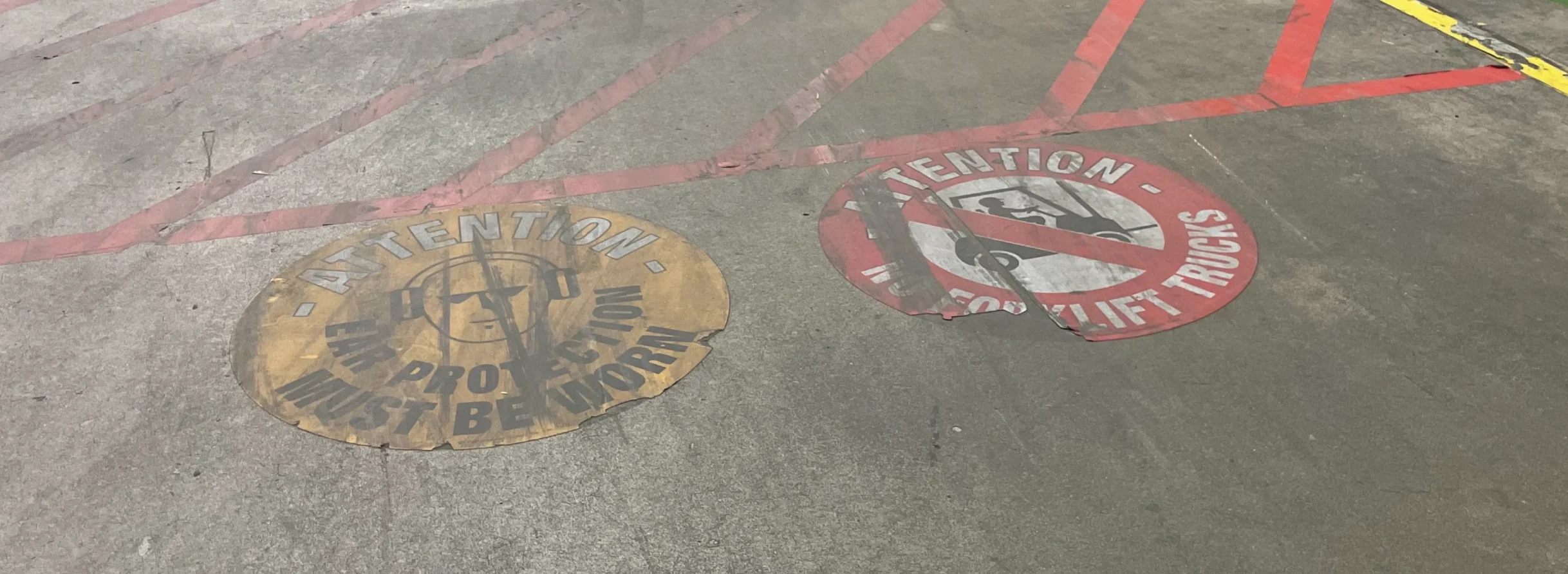
Visual clutter is another common problem. Consider a warehouse entrance covered with instructions about high-visibility clothing, protective footwear, hearing protection, vehicle routes and visitor procedures. Every message may have a legitimate purpose, but when they are crowded together, the most urgent warning can be harder to pick out.
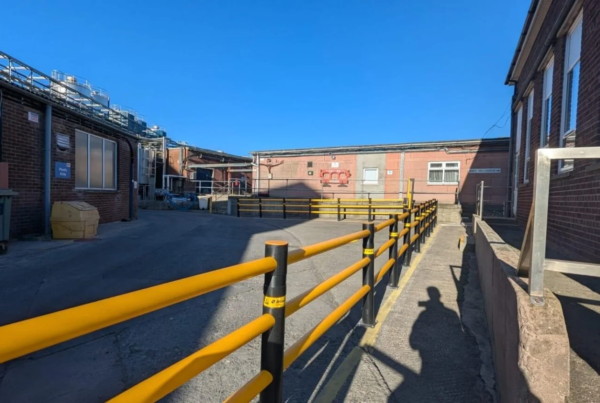
Placement matters just as much as quantity. A sign positioned too high, hidden by stock or placed after the point where a decision must be made is unlikely to give people the warning they need. In a pedestrian and forklift shared area, the crucial question is whether the warning is visible before someone enters the hazard zone.

Why Does Sign Blindness Matter in Warehouses?
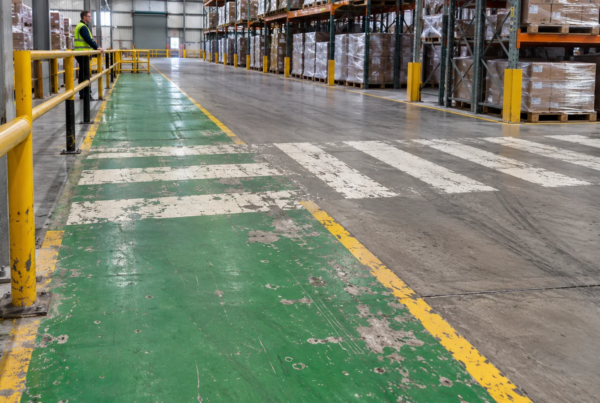
In a warehouse, people frequently make quick decisions around vehicle routes, pedestrian crossings, loading bays and restricted-access areas. A missed warning at one of these locations can contribute to unsafe movement, particularly where sightlines are poor or pedestrians and forklifts share space.
Signs are important, but they are only one part of workplace risk control. If a pedestrian can step directly into a busy forklift route, adding another warning sign does not remove the underlying conflict. The site may need physical segregation, a revised crossing layout or an access-control measure, depending on the risk assessment.
This is why a safety-signage review should consider what people actually do on site, not simply whether the required signs are present. Observe movement at busy periods, check signs from the approaching person’s viewpoint and look for places where warnings are being missed or routinely ignored.
How Can You Make Workplace Warnings More Effective?
Start by making each warning relevant, visible and timely. Remove duplicated or outdated instructions, group related information logically and give the most important messages sufficient space. Consistent symbols and clear wording help people recognise what action is required, while regular inspections can identify signs that have faded, become obstructed or no longer reflect the layout.
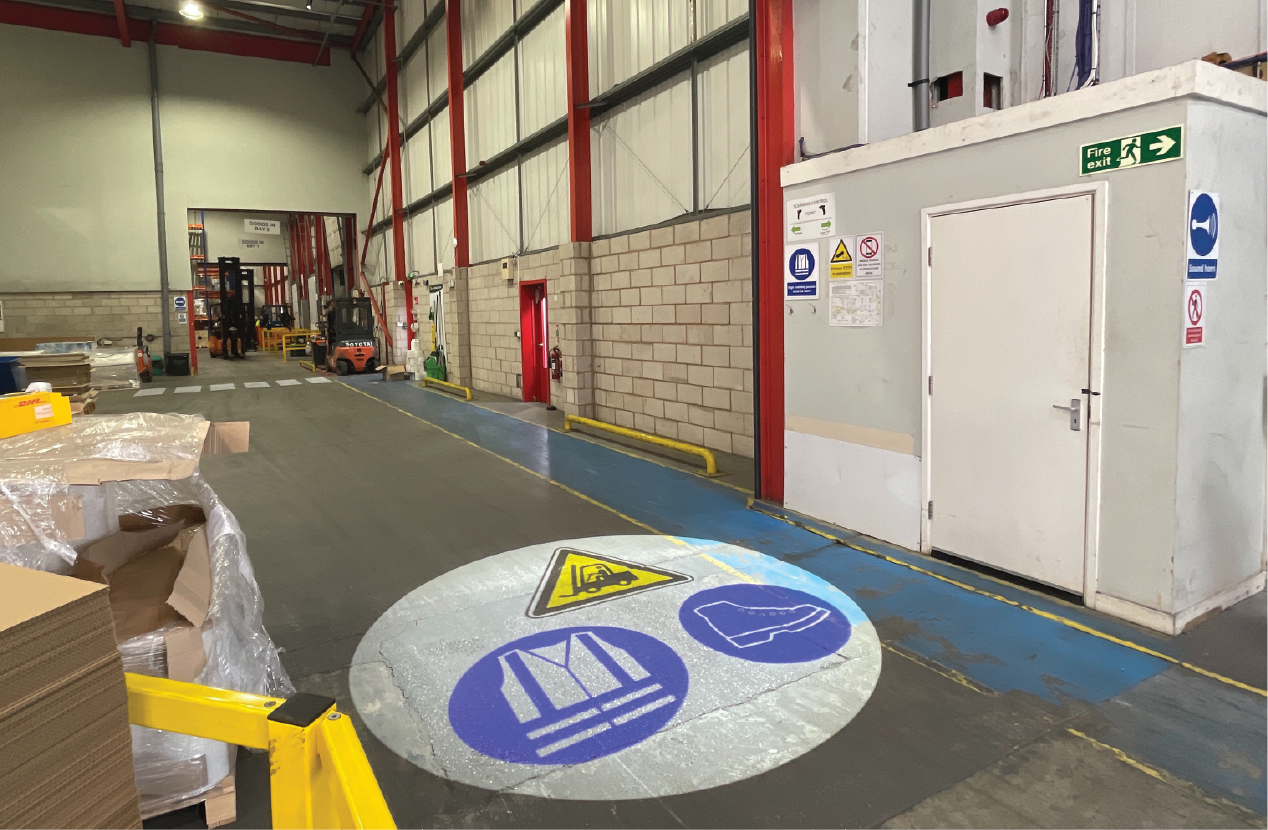
Where a particular hazard changes throughout the day, a static sign may not provide enough context. Projected safety markings, flashing beacons or audible alerts can, in suitable applications, be linked to a sensor so a warning appears when a vehicle approaches or a crossing becomes active. This can make the message more relevant to the immediate situation.
However, an active warning is not automatically more effective. Its visibility depends on lighting, surface conditions and positioning, while frequent or unnecessary activations can create their own alert-fatigue problem. Audible warnings may also be difficult to hear in noisy environments. These systems need to be selected and configured for the actual site conditions.
What Should You Check During a Safety-Signage Audit?
Walk the routes used by pedestrians and vehicles, ideally during normal working conditions. Look at signs from the distance and angle at which they need to be seen. Identify congested clusters of warnings, worn markings, blocked sightlines and messages that no longer match the way the area operates.
Ask workers where they feel unsure about priority or movement, and compare their answers with observed traffic patterns and near-miss records. If the same location repeatedly causes confusion, it may point to a layout or traffic-management problem that signage alone cannot solve.
For sites considering a new warning system, define the behaviour you want to influence first. Is the goal to stop pedestrians entering a forklift route, direct visitors to a safe walkway or alert drivers at a blind corner? The answer determines whether conventional signs, floor markings, projected warnings, active safety technology or physical protection will be the most appropriate response.
The bottom line: more signs do not necessarily mean better communication. Safety warnings work best when they are clear, placed at the point of decision and supported by controls that address the hazard itself. The aim is not simply to make a sign more noticeable, but to help people take the right action when it matters.