WSS Knowledge & Insights
5 Overlooked Causes of Forklift–Pedestrian Collisions in Warehouses
Familiar routes, deteriorating markings, unclear crossing rules, restricted visibility and gaps in daily controls can leave people exposed.
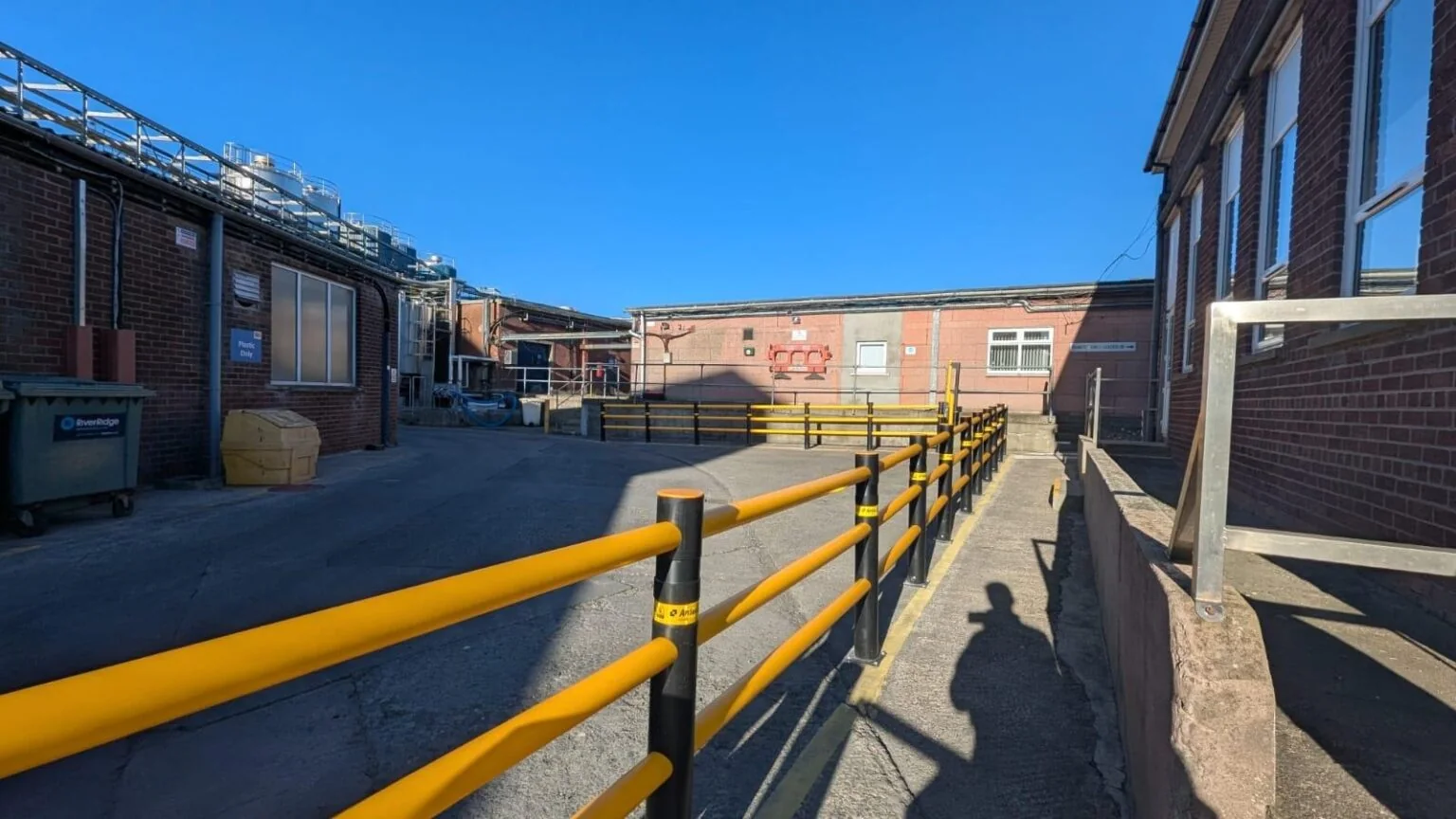
Forklift–pedestrian collision risk can develop through ordinary weaknesses that become accepted over time: a habitual shortcut, a faded crossing, a blocked sightline or a rule that is not consistently followed.
Five areas deserve a closer look: familiarity with the route, the condition of markings, communication at interaction points, lighting and visibility, and the way training is reinforced during daily work. These are practical review areas rather than a statistical ranking of accident causes.
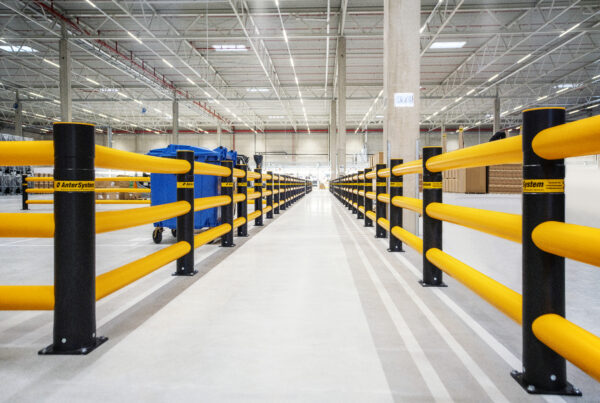
Start by considering whether the interaction can be removed. Warnings, cameras and sensors can have a role, but they should support suitable traffic arrangements and physical separation.
1. Complacency on Familiar Routes
A route used throughout every shift can become so familiar that people rely on what normally happens. A pedestrian expects the aisle to be clear. A driver expects people to wait at a crossing. A shortcut feels acceptable because it has been used before.
The concern is greatest where those expectations substitute for a reliable arrangement. Watch how people reach picking points, inspection areas and production doors, particularly when the operation is under pressure.
What to review: establish why people leave the designated route and whether their task can be reached more safely. The HSE’s guidance on separating pedestrians and vehicles recommends considering the paths people naturally follow when planning pedestrian routes.
Changes should make the route more usable and the rules more consistent. Changing signs simply to create novelty can add confusion without fixing the underlying problem.
2. Worn, Ignored or Outdated Markings
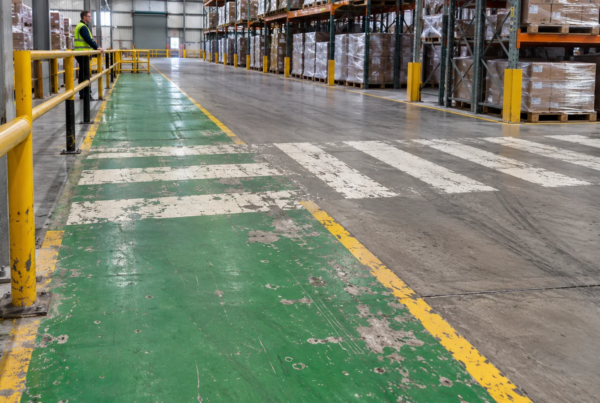
A crossing can remain visible on a site plan long after its floor markings have become difficult to recognise. Forklift turning, cleaning and general traffic can affect different marking systems in different ways.
There is also a separate question: does the marking still describe the current operation? A clear line is of limited value if storage arrangements have changed or a workstation now draws people across the vehicle lane.
What to review: check visibility from each approach, the surface condition and the reason for any repeated wear. Choose a floor-marking system suited to the surface and traffic, with a realistic maintenance plan. Where physical protection is needed, painted lines should be supported by an appropriate barrier arrangement.
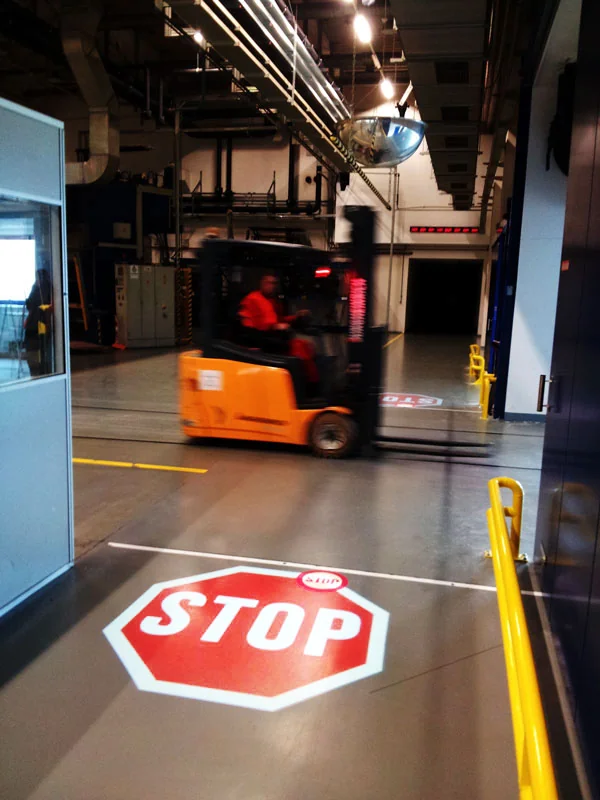
Projected warnings may provide an additional visual cue at selected locations. Their visibility must be checked under actual lighting conditions, including daylight through open doors.
3. Unclear Communication Between Drivers and Pedestrians
An interaction becomes unpredictable when the driver and pedestrian are working to different assumptions. One expects the truck to stop; the other expects the pedestrian to wait. Noise, loads and restricted sightlines can make informal signals harder to interpret.
Eye contact and horns should not be used to compensate for an uncontrolled crossing. The arrangement needs clear rules that apply to everyone, including visitors, contractors and agency staff.
What to review: check who must stop, where they must wait and how the rules are communicated. Make sure approaching users can see the crossing and understand the intended movement. Where suitable, assess controlled access, approach warnings or other measures around the specific interaction.
If pedestrian detection is being considered, define who receives the alert and what they are expected to do. Detection coverage, response time and nuisance alarms all need to be addressed during design and commissioning.
4. Poor Visibility at Doors, Corners and Lighting Transitions
A building can appear well lit while a particular interaction point remains difficult to see. Racking ends, stacked loads, doors and structural columns can restrict sightlines. An open loading door can introduce glare or a strong contrast between daylight and the interior.
What to review: inspect each approach from the positions of the driver and pedestrian. Include the relevant loads, parked vehicles and operating conditions. Remove or relocate obstructions where possible, and consider whether the crossing or doorway should be moved.
The HSE’s workplace transport lighting guidance highlights glare and sudden changes in lighting level. Check the location when those conditions occur, rather than relying only on an average lighting reading for the building.
Technology also has visibility limits. A camera needs a usable view of the area it monitors; it cannot see through a wall or opaque racking. Sensor selection and positioning should follow the risk assessment.
5. Training Without Consistent Daily Controls
Training is essential, but the site must support what people have been taught. If walkways are obstructed, crossing rules vary between shifts or damaged protection remains in place, the gap between the training and the live operation grows.
What to review: check supervision, authorisation, route conditions and the way recurring issues are resolved. Make the traffic arrangements part of induction and routine briefings, including for people who do not operate forklifts.
Where appropriate, operator access control, pre-use checks and vehicle speed management can support the arrangement. Their functions depend on the equipment and configuration; they do not remove the need for suitable routes, maintenance and competent supervision.
A Focused Check to Start With
Choose two interaction points that concern operators or pedestrians and observe them during normal work. Ask:
- Can people reach their destination using the intended route?
- Can approaching users see each other and understand who must wait?
- Are markings, barriers and gates visible, serviceable and suitable?
- What changes when loads accumulate or the area becomes busy?
- Which improvements would reduce exposure before another reminder is needed?
WSS can help review these interfaces and prioritise changes to physical protection, routes, markings and any additional active controls. Start with the movement creating the risk, then select the measures that address it.