
Solutions/Active safety/AI Camera Systems

AI Camera Systems

AI-powered camera systems that monitor workplace risk zones in real time, detect people, vehicles, PPE and site-specific hazards, and trigger warnings or control actions when risk is identified.

Overview

What are AI Camera Systems?

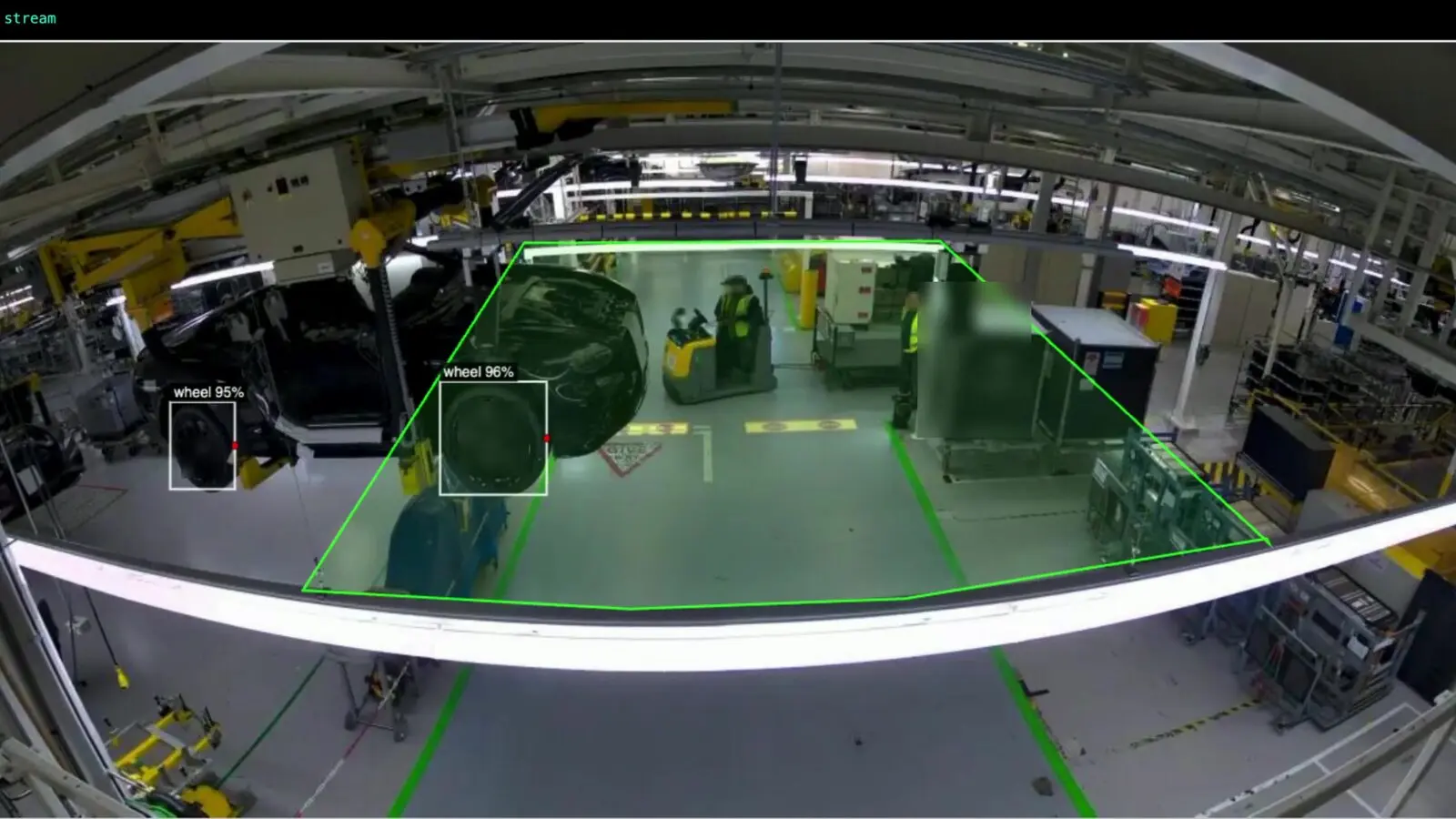
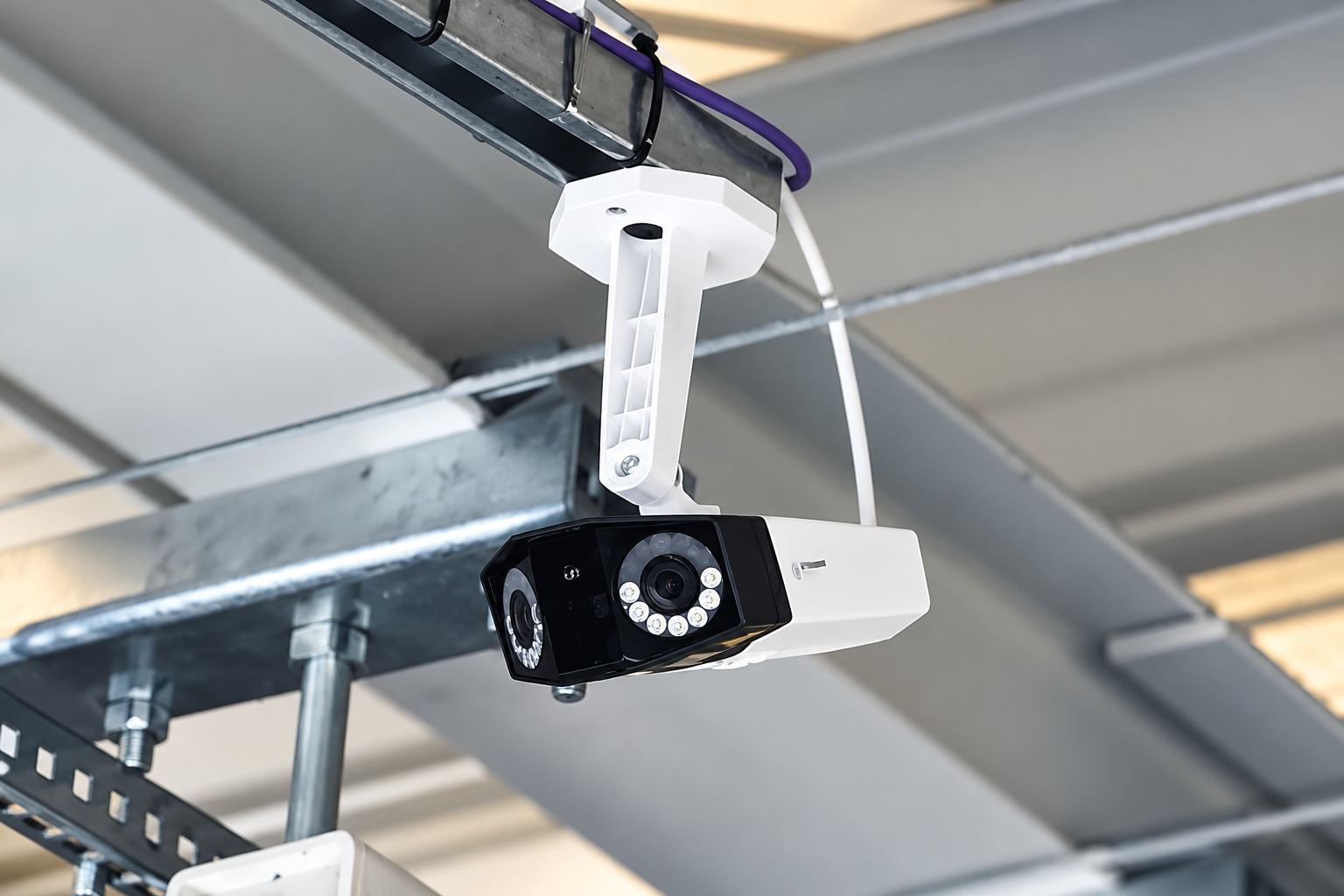
AI camera systems use computer vision to understand what is happening within a defined workplace zone rather than simply recording footage.

The technology can recognise people, vehicles, PPE and other site-specific hazards, apply predefined safety rules and respond in real time when a risk condition is detected.

Depending on the application, that response can include an alert, projected warning, restricted access, gate operation or another connected safety control.
Risks AI Camera Systems Can Help Control

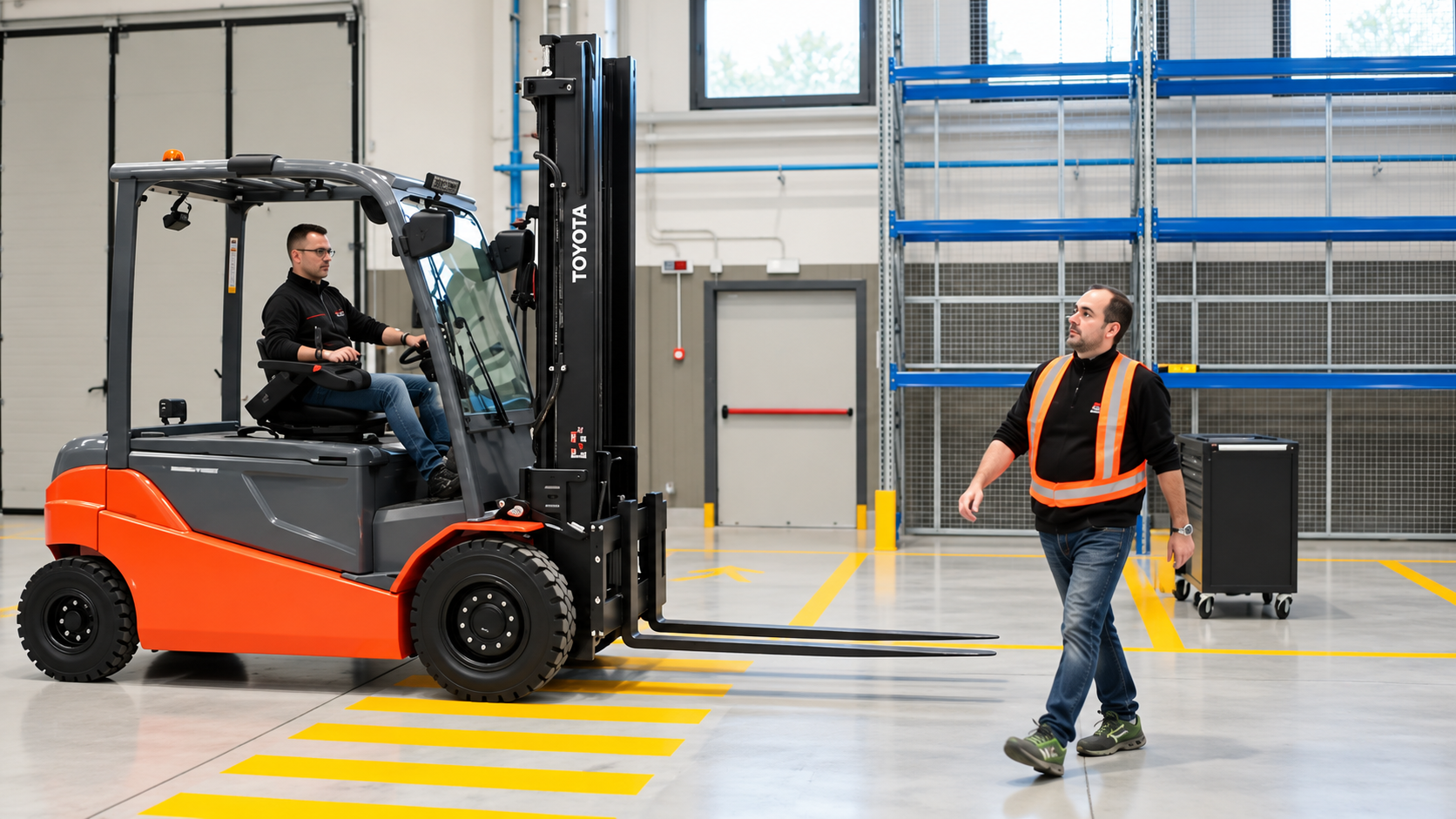
01VEHICLE–PEDESTRIAN INTERACTIONDetect people and vehicles entering shared or high-risk zones where an interaction could create danger.
02BLIND SPOTS & LIMITED VISIBILITYMonitor areas where walls, equipment, doorways or site layouts prevent people and vehicle operators seeing approaching hazards.
03RESTRICTED AREA ENTRYIdentify people or vehicles entering controlled or hazardous areas and trigger a warning or access response.
04UNSAFE BEHAVIOUR & ZONE BREACHESMonitor defined safety rules and identify movement or activity that creates additional risk.
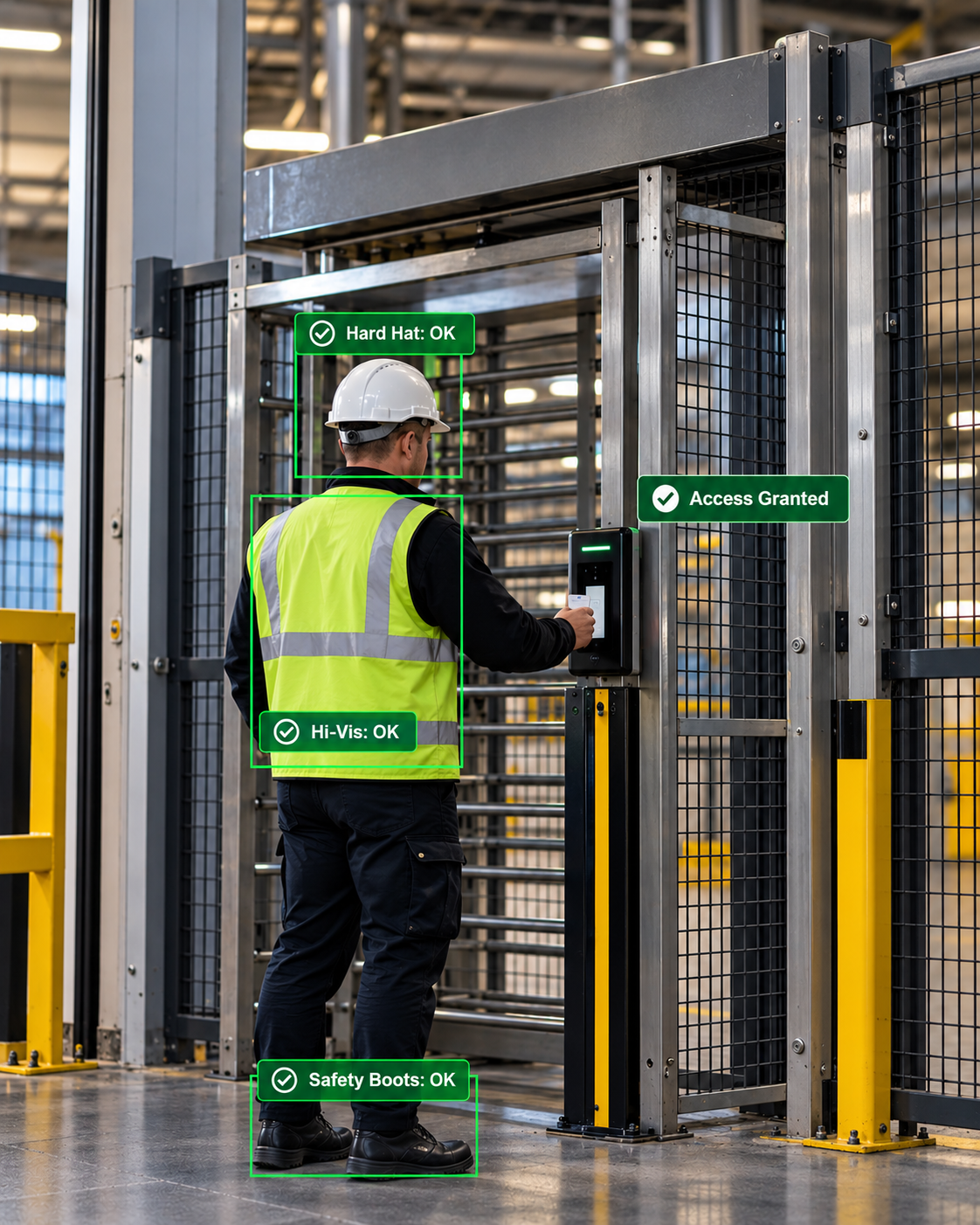
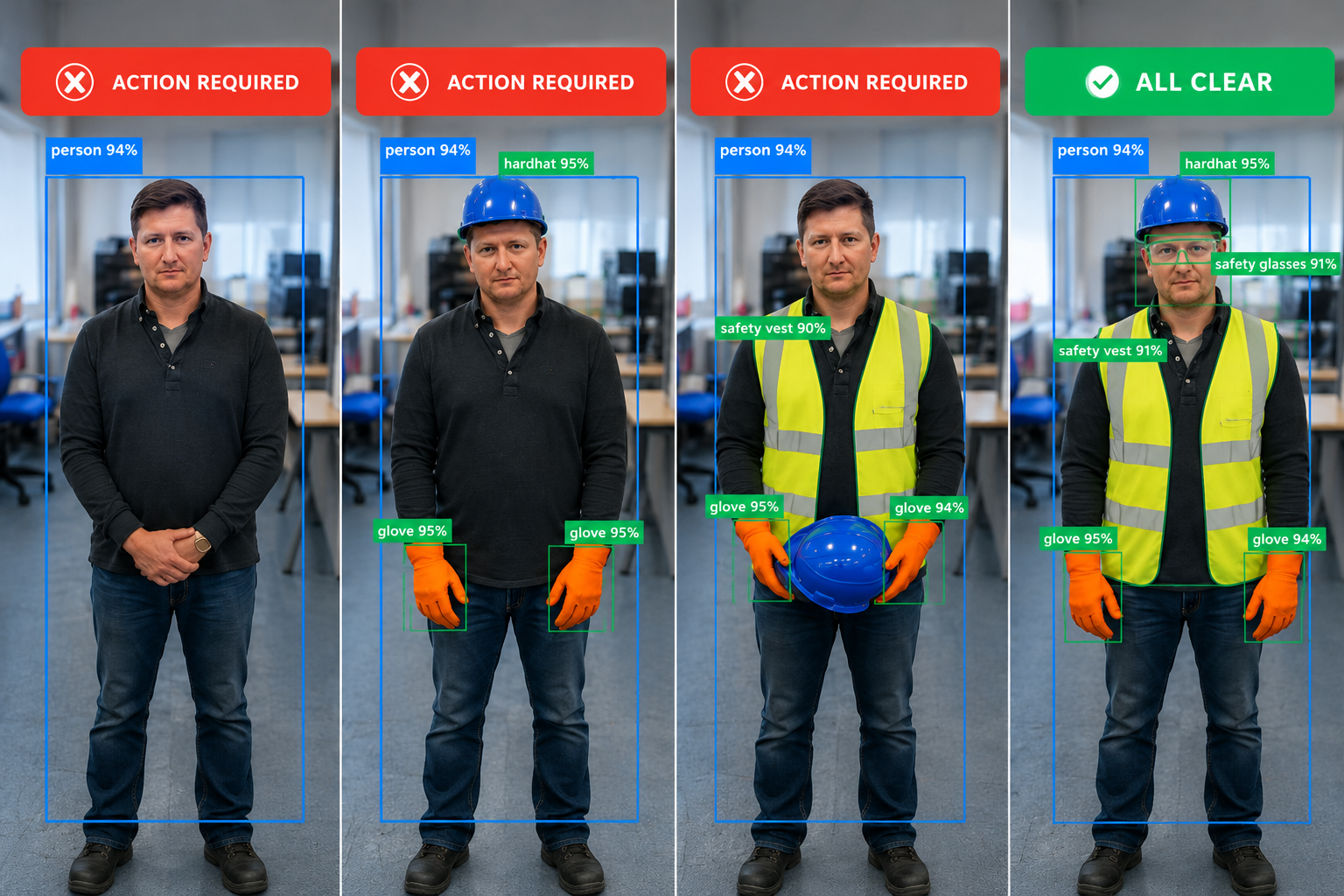
05PPE Non-ComplianceRecognise defined PPE requirements and trigger alerts or access controls when required equipment is not detected.
06NEAR-MISS & HIGH-RISK ACTIVITYCapture recurring interactions and events that help safety teams understand where additional controls may be required.

Why AI Camera Systems?

AI vision adds a responsive layer to workplace safety, continuously monitoring defined risk areas and allowing safety systems to react when conditions change.

01Improved Risk VisibilityMonitor defined zones continuously and identify interactions that may be missed through occasional observation or static controls.
02DETECT HAZARDS EARLIERRecognise people, vehicles, PPE and site-specific hazards as they enter defined risk zones.
03STRENGTHEN SAFETY COMPLIANCEMonitor rules such as restricted access or PPE requirements and trigger a response when predefined conditions are not met.
04MAKE SAFETY RESPONSIVEConnect AI detection with alarms, projected warnings, gates, barriers and access controls so existing safety measures can react to live risk.

Correct Specification Matters

AI camera systems are not one-size-fits-all. Detection accuracy and system performance depend on understanding the environment, the risk and the action the system needs to take. WSS™ considers:

The risk or event that needs to be detected
Camera position, coverage and field of view
Lighting and environmental conditions
Detection distance and zone geometry
Image resolution and frame rate
AI recognition models and detection rules
Processing requirements and response time
System logic and fail-safe behaviour
Integration with existing safety systems
Data handling, security and human oversight
– Online, offline or hybrid deployment requirements

We then configure the cameras, processing, detection zones and control logic around the specific application rather than applying a standard camera package.

FROM DETECTION TO ACTION

The real value of an AI camera system is what happens after a risk is detected. WSS can configure AI detection to trigger predefined responses including:

Visual or audible warnings
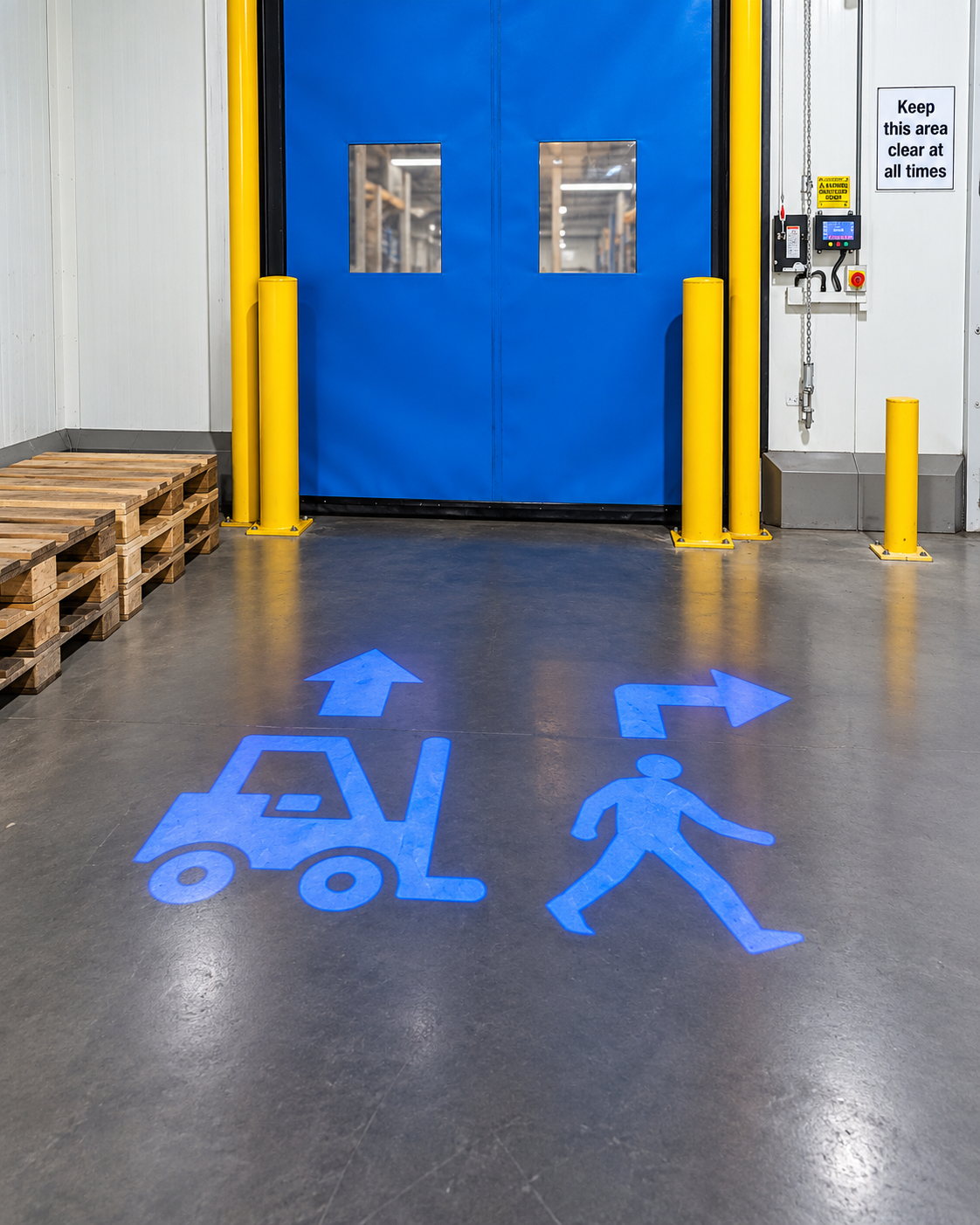
Projected safety markings
Automated pedestrian or vehicle gates
Restricted access
Operator alerts
Lighting or warning beacons
Site-specific control logic

CAMERAS OBSERVE. AI DETECTS. SITE-SPECIFIC LOGIC DECIDES. CONNECTED SYSTEMS ACT.

AI CAMERA SYSTEM APPLICATIONS

WSS designs AI systems around the risk rather than a fixed hardware package. Systems can operate as standalone detection or integrate with wider safety controls.
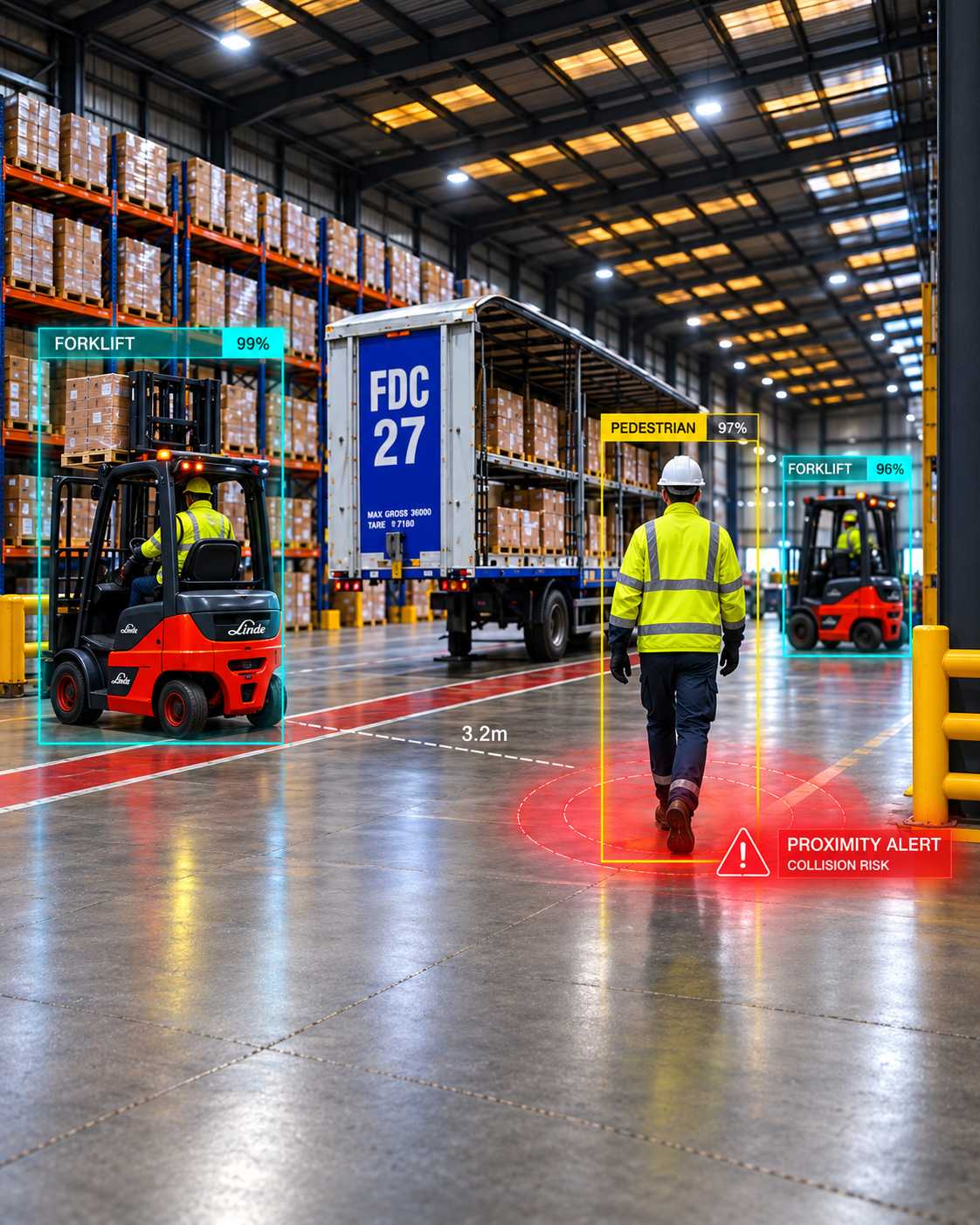
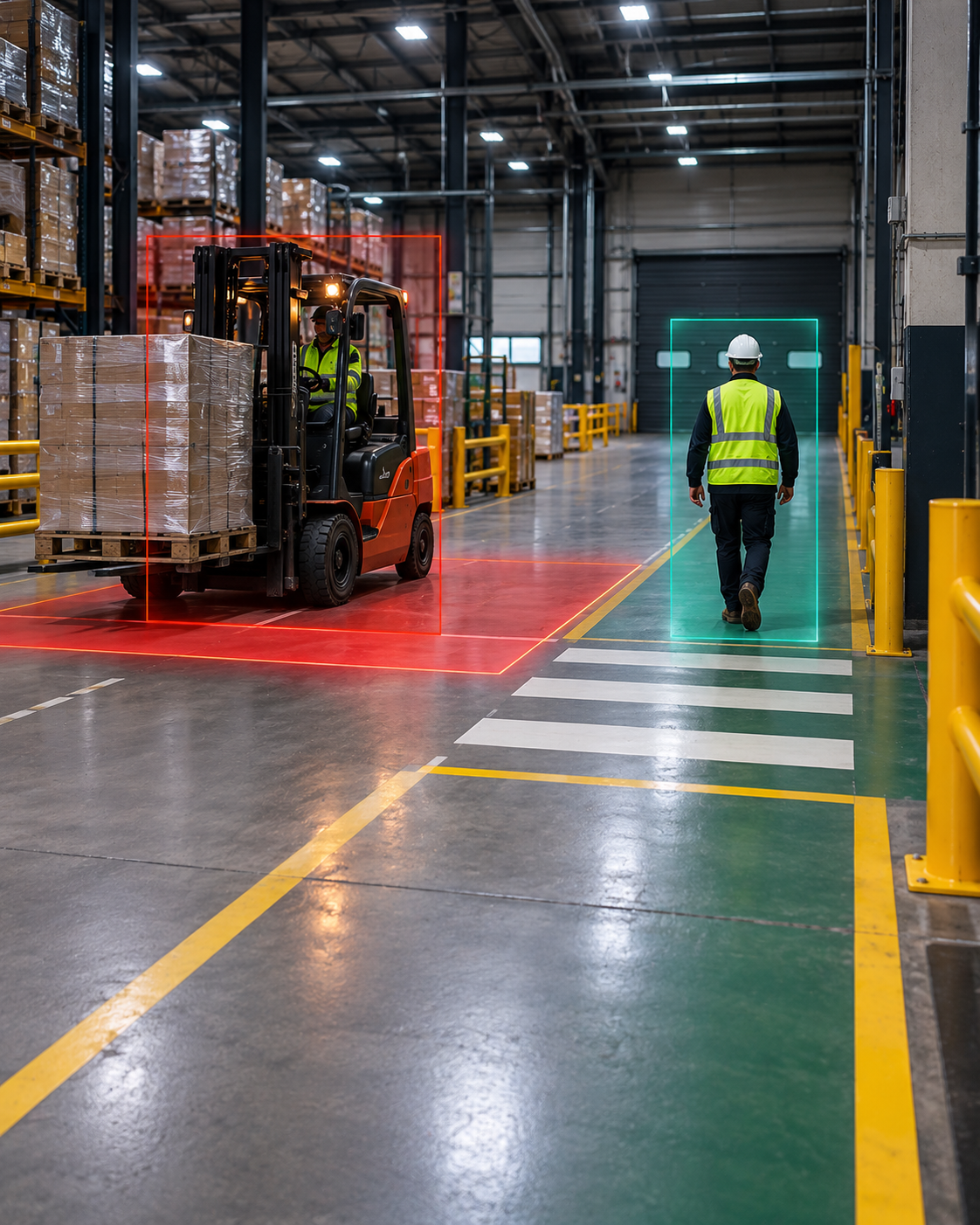
01PEDESTRIAN & VEHICLE DETECTIONDetect people and vehicles entering defined zones and trigger warnings or control logic where interaction creates risk.
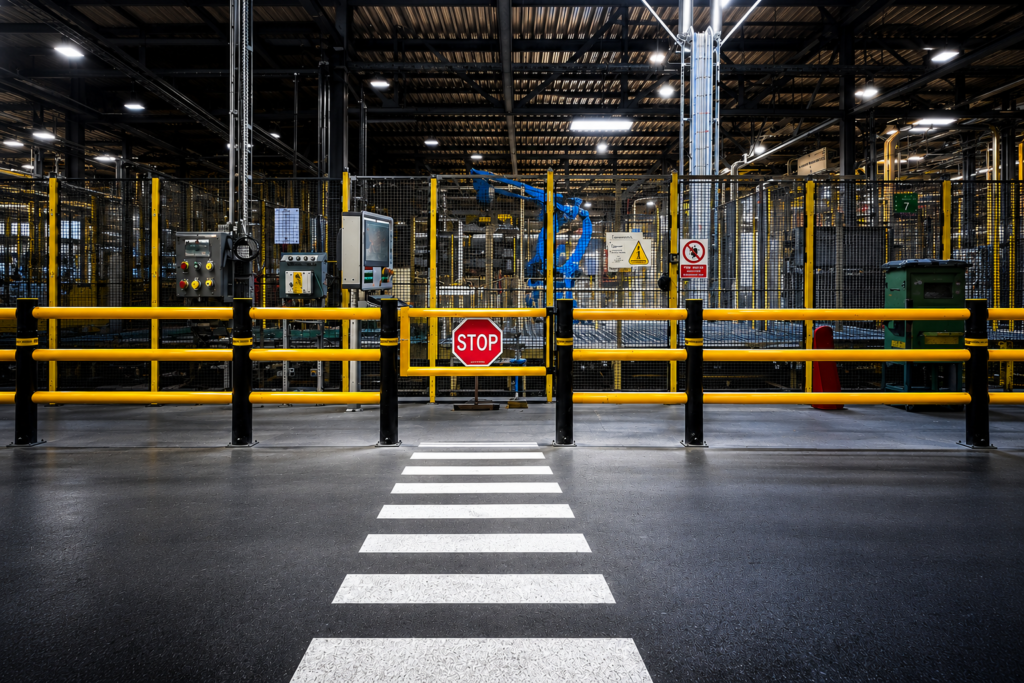
02BLIND-SPOT & CROSSING CONTROLMonitor obscured approaches, crossings and high-risk junctions and activate warnings when movement creates a conflict.
03PPE & ACCESS CONTROLCheck defined PPE requirements and link detection with warnings or controlled entry where required.
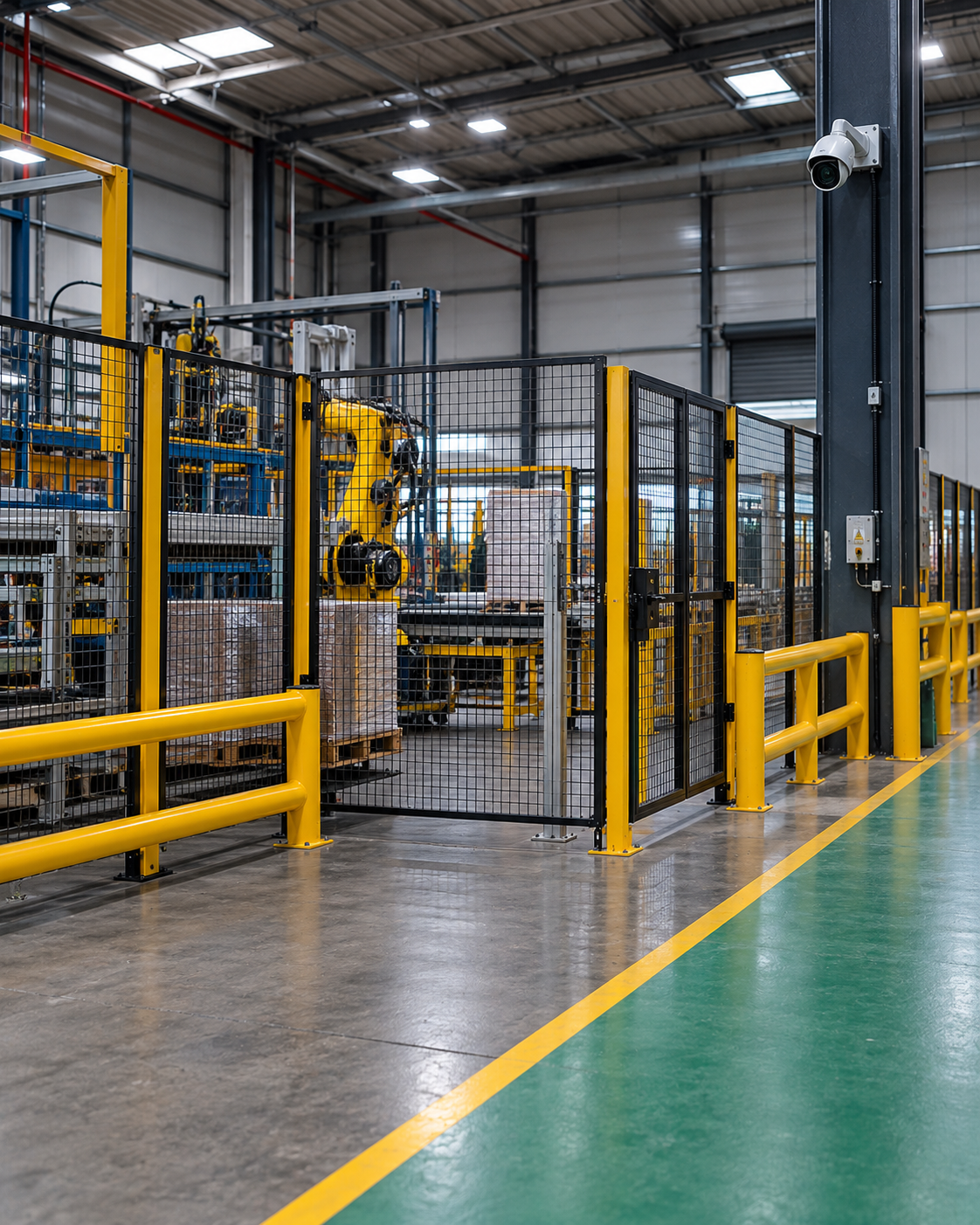
04RESTRICTED AREA MONITORINGDetect unauthorised entry into hazardous or controlled zones and trigger a predefined response.
05CUSTOM HAZARD RECOGNITIONConfigure AI recognition and safety logic around specific objects, behaviours or operational hazards unique to the site.
Proven on site

AI SAFETY IN PRACTICE

See how WSS uses AI detection and connected safety controls to address real workplace risks.
All case studies →

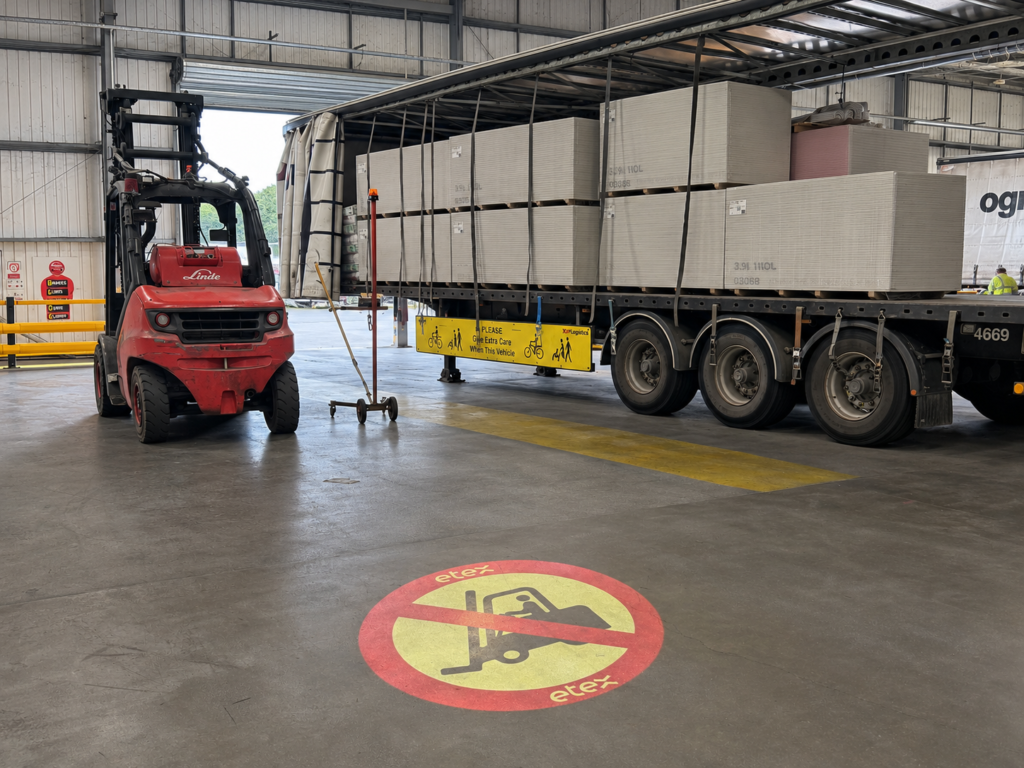
Projected Safety Markings and Polymeric Segregation at Plasterboard ManufacturerCASE STUDYProjected Safety MarkingsSafety Barriers

Projected Safety Markings and Polymeric Segregation at Plasterboard Manufacturer

May 21, 2026
Dynamic Projected Markings Transform Safety at Cheese Manufacturing PlantCASE STUDYProjected Safety Markings

Dynamic Projected Markings Transform Safety at Cheese Manufacturing Plant

May 21, 2026
Anter Barrier Deflection Zones
Warehouse Safety Barriers: Why Joule Ratings Are the Only Fair Way to Compare Strength BLOG

Warehouse Safety Barriers: Why Joule Ratings Are the Only Fair Way to Compare Strength 

November 21, 2025
Kiwisat Heat Map
What Heatmaps Can Reveal About Hidden Danger Zones in Your SiteBLOGFeatured

What Heatmaps Can Reveal About Hidden Danger Zones in Your Site

September 24, 2025
Warehouse Layout
Is Your Warehouse Layout to Blame for Near Misses? BLOG

Is Your Warehouse Layout to Blame for Near Misses? 

September 22, 2025
Automatic Safety Gate System
Are Your Automated Safety Gates Compliant with UK and EU Law?BLOG

Are Your Automated Safety Gates Compliant with UK and EU Law?

September 15, 2025
Walkway Projected Safety Signage
What’s the Best Way to Manage Safety Across Different Sites?BLOG

What’s the Best Way to Manage Safety Across Different Sites?

September 9, 2025
Proven on site

Case studies

All case studies →

WHERE DOES YOUR SITE NEED EARLIER WARNING?

If blind spots, shared routes, restricted areas or changing behaviour are creating risk, speak to WSS. We’ll assess what needs to be detected, how the system should respond and whether AI vision is the right control for the application.

    Get a Tailored Safety Plan for Your Workplace