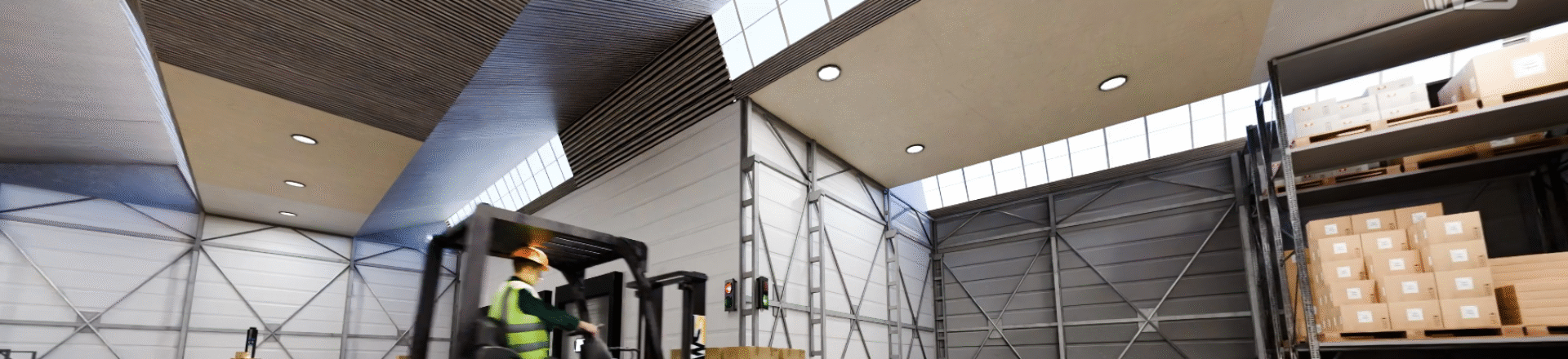
Is Your Warehouse Layout to Blame for Near Misses?
If your team sees more near misses – forklifts braking hard to avoid collisions, workers stepping into the path of vehicles, or sudden close calls at blind corners – your warehouse layout may be at the heart of the problem.
It’s easy to assume near misses happen because people aren’t paying attention. But in many cases, the environment itself creates unsafe situations.
A layout that forces forklifts and pedestrians into the same space, reduces visibility, or leaves walkways unclear increases the chance of accidents every day.
How to Recognise a Risky Warehouse Layout
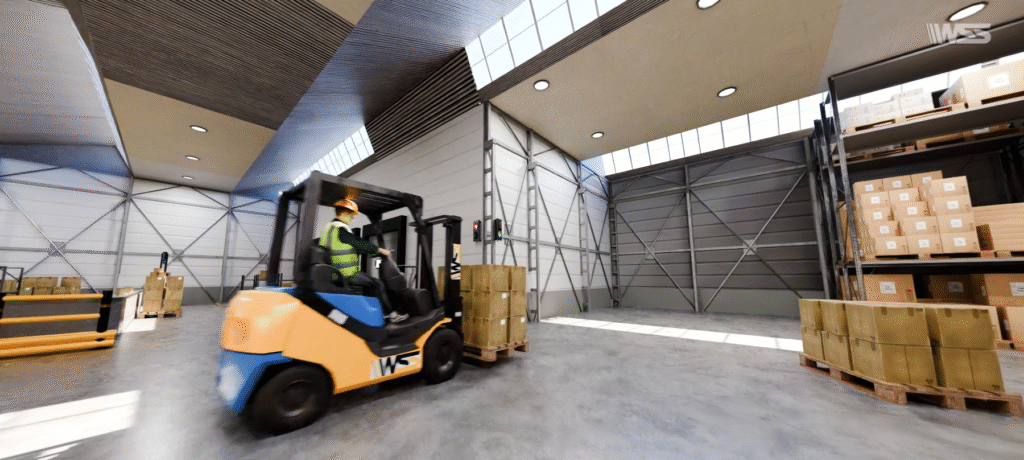
A warehouse can look organised on the surface and still hide major risks. Warning signs include:
1. Near Miss Warehouse “Hotspots”
Do close calls keep happening in the same places – such as busy intersections, shared doorways, or congested picking zones? These aren’t coincidences. They’re layout-driven hazards in the workplace.
2. Pedestrian–Forklift Conflict
If walkways overlap with forklift travel routes, you’re relying entirely on human vigilance. Over time, people get complacent, especially in noisy, high-traffic environments. Layouts that don’t provide physical or visual separation are a major cause of forklift safety issues.
3. Poor Warehouse Visibility
Blind corners, blocked lines of sight, or inadequate lighting leave both pedestrians and drivers exposed. If someone has to “edge forward and hope” before moving, the layout isn’t safe.
4. Unclear Warehouse Routes and Signage
When safety signage and walkways are faded, inconsistent, or hard to follow, people fall back on habit instead of safe movement. Pedestrians should always know exactly where they should walk, and drivers should always know their dedicated routes.
What a Safer Warehouse Layout Looks Like

In a safer warehouse, people and machines don’t need to constantly second-guess each other – the environment makes the safe choice obvious.
Key elements include:
- Clear pedestrian routes: Walkways that are continuous, well-marked, and kept separate from forklift paths wherever possible.
- Dedicated vehicle zones: Forklifts follow clearly defined lanes, with enough space for manoeuvring without crossing pedestrian areas.
- Visibility at intersections: Mirrors, Signage, open sightlines, and strong lighting reduce the risk of hidden movements.
- High-impact signage and markings: Bright, consistent guidance shows both pedestrians and drivers where it’s safe to move – and where it isn’t. Modern solutions like projected LED floor markings provide crisp, attention-grabbing signs that don’t fade like paint.
When Full Separation Isn’t Possible
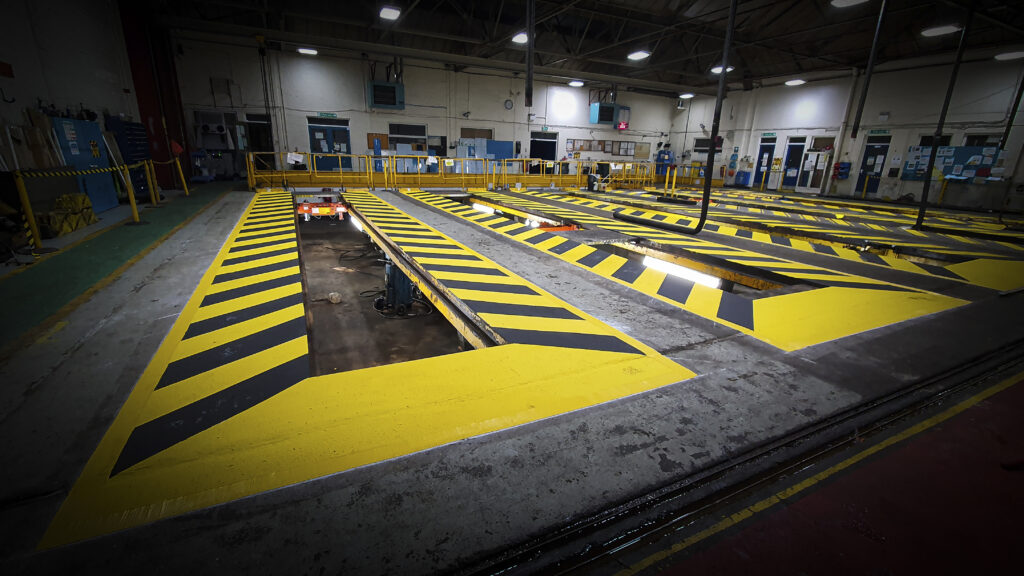
Not every warehouse has the luxury of complete segregation. Narrow layouts, shared access points, or limited floor space sometimes make it impossible to keep pedestrians and vehicles apart at all times.
In these cases, automation and safety technology can provide an extra layer of protection:
- Forklift detection sensors that alert both drivers and pedestrians when they’re approaching each other.
- Proximity-based speed control, where forklifts automatically slow down in high-risk areas.
- Automated warning systems like projected floor signs or flashing beacons triggered by motion sensors.
- Smart access control that ensures only authorised operators can move forklifts in certain zones.
These tools don’t replace a well-thought-out layout, but they make shared spaces safer by reducing reliance on human attention alone.
Questions to Ask About Your Warehouse Layout
To make layout part of your warehouse safety strategy, start by walking the site and asking:
- Do pedestrians have a continuous, safe route that avoids crossing forklift traffic?
- Can forklift drivers clearly see their safe paths, with no blind spots at junctions?
- Are safety barriers in the right places to protect people from vehicle movement?
- Is signage bright, visible, and consistent – or is it faded and easy to ignore?
If the answer to any of these is “no,” your layout may be increasing workplace risk.
Safer Layout, Safer workplace.
You can’t rely on training alone to prevent accidents. Even the most careful workers can only do so much if the warehouse layout pushes them into conflict with forklifts or hides vital sightlines.
By treating layout as a safety tool — not just an operational choice — you can remove the conditions that cause near misses in the first place. When people and vehicles are clearly separated, signage is unmissable, and visibility is built into the design, safety becomes effortless.
Need Advice on Your Warehouse Layout?
Contact WSS today for more advice on deciding the most effective warehouse layout to reduce workplace risk.
Back to blogIs Your Warehouse Layout to Blame for Near Misses?


