WSS Knowledge & Insights
The Risks Your Site Stops Seeing Because They Happen Every Day
A familiar shortcut, a faded crossing or a blind corner can become part of the routine long before the underlying risk has been resolved.

Some site safety risks become harder to spot because they are so familiar. A pedestrian cuts through a forklift route. A driver edges around the same blind corner. A crossing becomes harder to see, but everyone knows where it is meant to be.
At first, these things attract attention. Over time, teams develop workarounds and the operation carries on. The absence of a serious incident can make the arrangement feel acceptable, even though people are still exposed.
Familiarity does not make the risk smaller. It can make the need to review it less obvious.
When Near Misses Become Part of the Job
A near miss is an opportunity to investigate why an interaction happened. If the response is repeatedly a reminder to be careful, the physical arrangement may remain unchanged.
Common examples worth examining include:
- Pedestrians cutting across an active forklift area to reach a workstation.
- Drivers and pedestrians relying on eye contact at a poorly positioned crossing.
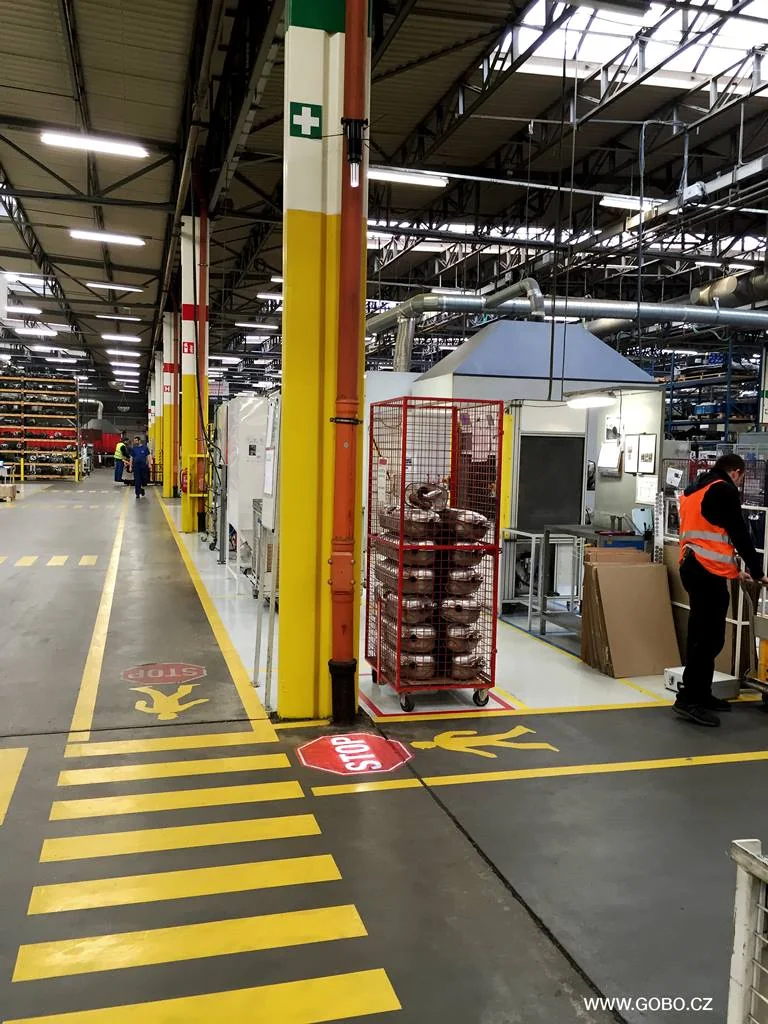
- Worn markings that no longer make the intended route clear.
- Doors opening close to vehicle movements.
- Temporary storage or temporary routes becoming permanent.
- Repeated contact with the same barrier, column or door frame.
These observations should be investigated rather than dismissed as isolated lapses. They may point to a route, task or control that no longer suits the operation.
Why the Same Behaviour Keeps Returning
It is reasonable to expect people to follow an agreed route. But when the same shortcut keeps appearing, ask what makes it attractive.
Perhaps the designated route adds a long detour to a task repeated throughout the shift. Perhaps pallets block it during despatch. Perhaps the crossing is positioned away from the place people actually need to reach.
A reminder may correct the immediate behaviour without changing any of those conditions. Operators and pedestrians can then drift back to the workaround as soon as the area becomes busy.
The practical question is: what would make the intended route the straightforward route to use? That could involve changing the route, moving a task, protecting an access point or reviewing where vehicles are allowed to operate.
Listen for the Explanations People Have Got Used To
Phrases such as “everyone knows to be careful there”, “it has always been like that” or “we have had a few close calls, but nothing serious” are useful starting points for a conversation.
They do not prove that a particular control has failed. They do suggest that the team may be relying heavily on local knowledge, attention or timing. Consider how that arrangement works for a new starter, a contractor or someone covering a different shift.
Ask people to show you the movement they are describing. Seeing the route in use is more helpful than discussing it only in a meeting room.
Review the Live Site, Including Its Busy Periods
A useful review compares the written arrangement with what happens during normal work. Walk the route with operations and safety staff, and include the people who perform the task.
- Where do pedestrians really walk, and where do vehicles turn, queue or reverse?
- Which crossings depend on people judging a gap in traffic?
- Where do loads, doors or equipment restrict visibility?
- Which controls become difficult to follow at peak demand?
- What would concern someone seeing the area for the first time?
Record the underlying issue and agree who will address it. A visible action with a clear owner is more useful than repeatedly adding the same observation to a near-miss log.
Choose the Change That Addresses the Cause
If the route is impractical, review the route. If physical separation is missing where it is needed, consider suitable barriers and pedestrian protection. If the route is suitable but its markings have deteriorated, review the marking system and maintenance plan.
Where an unavoidable interaction remains, triggered projected warnings or appropriate detection may support the arrangement. Their role and limitations need to be clear; a warning cannot make an unsuitable traffic layout acceptable on its own.
WSS can help assess those movements and identify a practical sequence of improvements. The aim is to resolve what is driving the recurring exposure, so the same shortcut, blind corner or worn crossing does not keep returning to the agenda.